Our Blog
Insights, news, and stories from the world of Open Innovation.
Social Innovation Gateway: The First Impact Venture Clienting Program in Europe
Venture Clienting has established itself in recent years as a central method through which companies can integrate startups quickly and effectively. With the Social Innovation Gateway, we are applying this approach to the area of social innovation for the first time. In doing so, we are setting a new standard: impact-driven startups and corporates collaborate in the Venture Clienting model to bring social innovations directly into practice.
Implementing Open Innovation Successfully: Why It’s Not About Mindset – But About Structure and ROI
Open Innovation has long been a stated goal for many companies. The willingness to collaborate with external partners — such as startups, tech teams, or research institutions — is there. But in practice it becomes clear: good intentions alone are not enough when processes, structures, and arguments for internal decision-makers are missing.
This is exactly where the ekipa Academy comes in — a new continuing education and enablement format for innovation managers that conveys strategic knowledge from over 100 Open Innovation projects in a compact, practice-oriented form.
How Venturing as a Service Works
Why is it so rarely successful, despite a clear innovation strategy, to integrate external solutions into the organization in a structured and repeatable way?
Almost every company wants to stay innovative. In practice, however, implementation often remains unsystematic. Projects arise sporadically, budgets are limited, scouting is not continuous, and decision-making logic differs from department to department. Innovation therefore depends more on individual initiatives than on a reliable system.
Publicly Co-Financed Venturing as a Lever for the mid-sized companies (Mittelstand)
Testing External Innovation with Low Risk and Compatible Integration in the Company
Why Companies Don’t Need to Build Their Own Venturing Team
What Matters in Corporate Venturing
Why Corporate Venturing Doesn’t Have to Be a Budget Problem
Many companies want to leverage external innovation but face a straightforward question: How can the entry be sensibly financed and justified internally? Corporate Venturing is often thought of in large terms from the outset — with a dedicated team, new tools, and broad-based search. This is precisely where the first hurdle arises. Costs are difficult to plan, outcomes are unclear, and internal legitimacy is lacking. Yet the challenge rarely lies in the relevance of the topics, but in a pragmatic entry that remains manageable and delivers first results.
4 Barriers Why Open Innovation Fails – and What Smart Companies Do Differently
Open Innovation is seen as the key to making external expertise usable more quickly, integrating new technologies, and proactively advancing future topics. Expectations are high — yet in practice the approach fails surprisingly often.
Press Release: Hessen Investor Summit 2025 Sends a Strong Signal for Hessen’s Innovation Strength
The Hessen Investor Summit 2025 brought together 156 investors, innovation decision-makers, and startups on November 25th at CineStar Metropolis Frankfurt. The goal of the format, developed by ekipa in collaboration with the Hessian Ministry of Economics, is to specifically connect validated and technological innovations with capital, corporate needs, and real use cases. By combining Venture Clienting and Venture Capital, the Hessen Investor Summit unites corporate needs, validated technologies, and financing perspectives in a structured format that strengthens the economic viability of innovations.
Hessen Investor Summit 2025 – Supported by the Hessian Ministry of Economics and Regional Partners
The investor landscape is changing. Instead of grand visions and impressive presentations, verifiable results are increasingly what counts: functioning business models, tested applications, and customer partnerships.
The Hessen Investor Summit (HIS) picks up on this development and, on November 25, 2025 in Frankfurt, sends a clear signal: it connects what has mostly been running in parallel — Venture Clienting as Proof-of-Use and Venture Capital as Proof-of-Scale — and thus creates a continuous path from validated application to financing. The Summit focuses on demonstrable results and real applications rather than staging.

Successful Collaboration Between Corporations and Startups
Collaboration between corporations and startups is a key driver of innovation and sustainable growth. However, moving from initial discussions to a true partnership often comes with challenges. How can the foundation for successful collaboration be established?
Economic Development Rethought: How Public Programs Strengthen Companies’ Ability to Innovate
Innovation rarely emerges in a vacuum — and certainly not in the course of day-to-day business. Especially for mid-sized companies, creating space for radical innovations alongside operational tasks is a challenge: insufficient time, limited budgets, technological uncertainties, regulatory pressure. And yet it is clear: those who do not innovate today will lose their footing tomorrow.
Guest Article: The Illusion of Safety: How Risk-Aversion in the Boardroom Leads Directly to Market Irrelevance
In the traditional corporate world, especially within established industrial powerhouses, there is a deep-seated belief that caution is a virtue. We call it "risk management," and we use it to justify long approval cycles, rigid hierarchies, and a healthy skepticism toward anything unproven.

Key Open Innovation Trends to Watch in 2025
Discover how Venture Clienting, Sustainable Innovation, and AI are revolutionizing open innovation in 2025. These trends empower businesses to collaborate, reduce environmental impact, and leverage data for transformative growth.
Why the Venture Client Incubator Hessen Strengthens the Innovation Landscape
The Venture Client Incubator Hessen is a key initiative for promoting innovation and economic growth in the region. Through targeted collaboration between Hessian startups and scale-ups and established companies, knowledge transfer is advanced and the development of innovative solutions is supported. The program provides startups in Hessen with access to resources, coaching, and networks that ekipa makes available to bring their ideas to market readiness more quickly. This gives rise to new business opportunities and future-oriented jobs that sustainably strengthen innovation capacity.

How Open Innovation Enhances Venture Clienting: A Winning Strategy to effectively accelerate innovation cycles
This blog post explores the powerful synergy between Open Innovation and venture clienting, showing how integrating these strategies can drive growth, accelerate product development, and maintain a competitive edge. It also highlights to implement these approaches effectively.
How Open Innovation Strengthens Venture Clienting: An Effective Strategy for Accelerating Innovation Cycles
This blog post illuminates the strong connection between open innovation processes and Venture Clienting. It shows how the combination of both approaches can drive growth, shorten development cycles, and keep companies sustainably competitive. It also outlines which factors are decisive for anchoring these strategies in the organization in a targeted and effective way.
Open Innovation & Collaboration at LBBW: Where Impact Investing, Blockchain Technology and Sustainability Become a Matter of the Heart
The LBBW project within the ekipa Future Finance Open Innovation Program shows how new thinking, future technologies, and collaborations enable and allow sustainable and social innovations to flourish. Yes, this requires a tendency toward openness and also trust, because in the financial markets there is no avoiding a degree of risk.

How Open Innovation Revolutionizes Employer Branding
In a rapidly changing work environment, companies must position themselves as attractive employers. Attracting and retaining top talent has become increasingly challenging due to several factors.

Ecosystems vs. Networks: Why the Future Lies in Collaborative Ecosystems
True innovation goes beyond simple networking—it's about creating dynamic ecosystems tailored to address real-world business challenges.

Universities in Open Innovation Big Picture
Universities have long been bastions of knowledge and innovation, but their role in the open innovation landscape is both dynamic and critical.

Navigating Intellectual Property (IP) Rights in Open Innovation Challenges
Open innovation challenges offer a dynamic platform for companies and individuals to collaborate on solving complex problems or developing new products and technologies. However, the integration of diverse contributions can raise complex issues concerning intellectual property (IP) rights, which need to be managed to prevent disputes and encourage participation.

Utilizing Open Innovation for Efficient GenAI Integration in Your Business
In the rapidly evolving landscape of technology, artificial intelligence (AI) and its applications are not just transforming industries; they are revolutionizing them. Among these transformative technologies, Generative AI (GenAI) stands out with its profound potential to innovate across sectors.
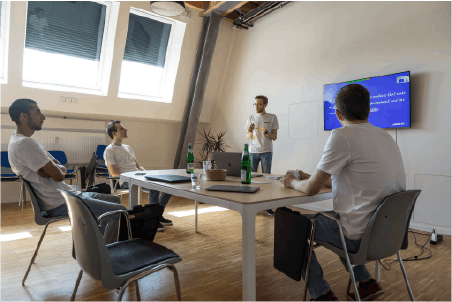
From Initial Connection to Industry Innovation: The APG and JadenX Case Study
When APG, a premier pension provider in the Netherlands, issued a challenge to revolutionize pension guidance through AI, they sought innovative minds to demystify retirement planning. This challenge aimed to harness the power of generative AI, like ChatGPT, to offer personalized, insightful, and accessible pension information.
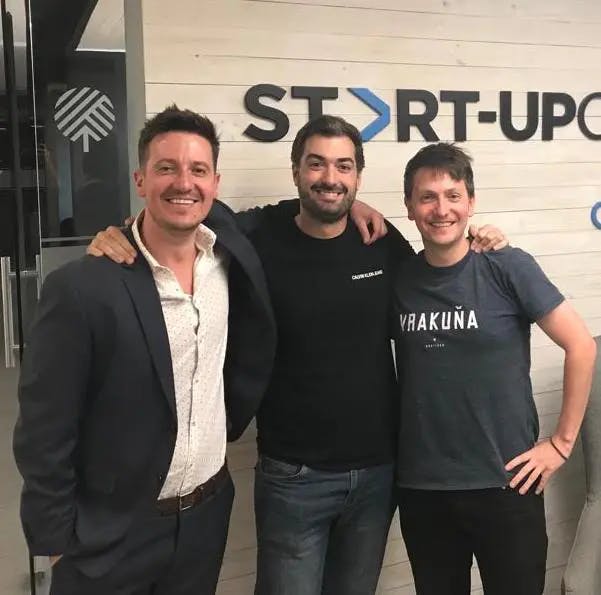
From a Sketch in a Berlin Bar to the global Stage: How Innovation with Impact succeeds
In the beginning, sometimes it's a simple idea that lays the foundation for something great and the start of a successful journey. That's what happened to the Berlin-based startup Clurb when they summed up their founding idea in a statement in a Kreuzberg pub in June 2017: “We will do something simple and affordable, that cities can use with minimal external support”.
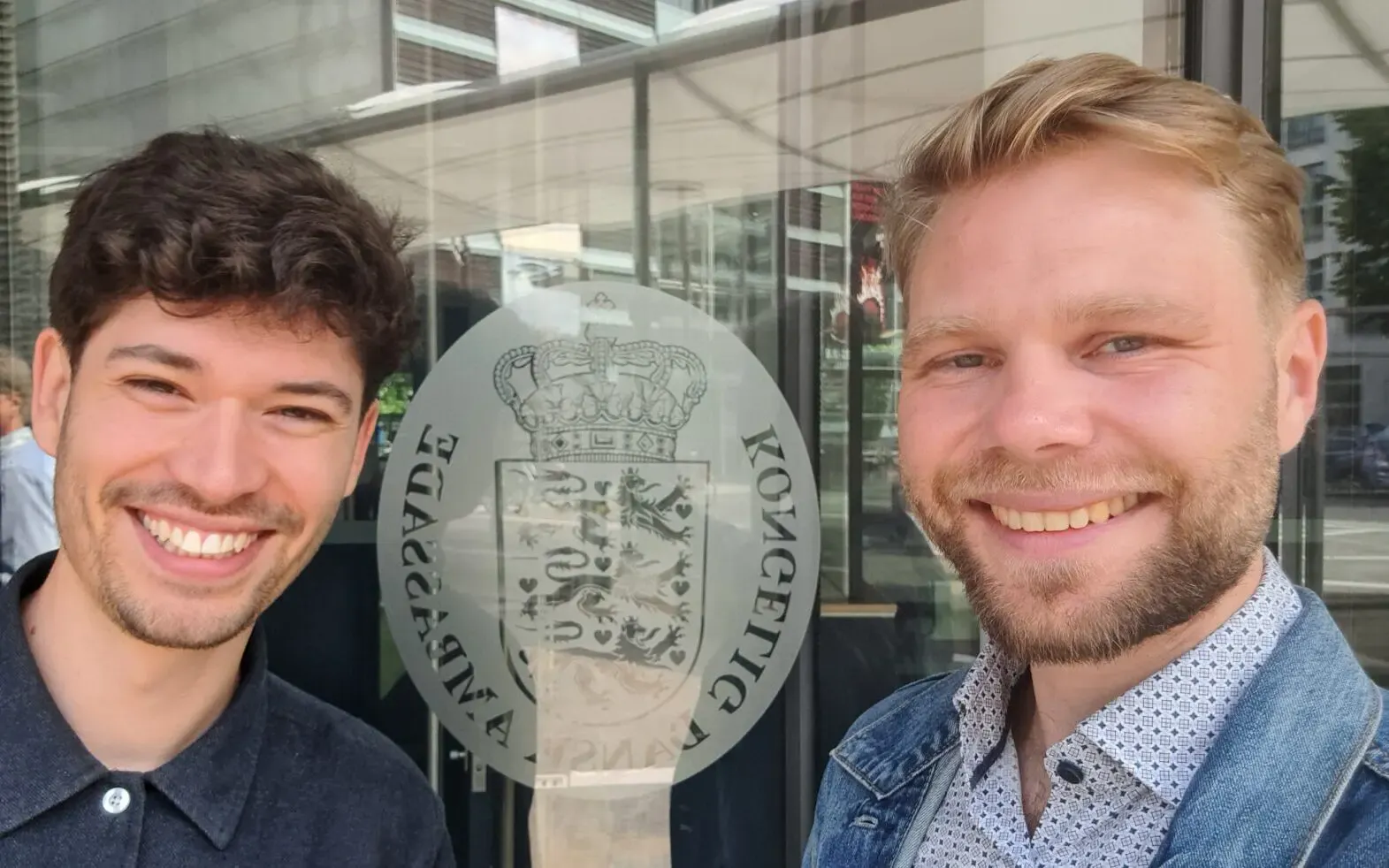
AGRICULTURE MEETS DIGITAL INNOVATION - THE SUCCESS STORY OF RWZ AND AGRACHECK AT DEUTSCHLAND 4.0
Read moreClarify your Corporate Venturing opportunity in 30 minutes.
- A structured read of your innovation priorities, your organizational constraints, and the right venturing instrument for your context
- A concrete recommendation on the right engagement model and whether Public-Enabled Venturing or Venturing as a Service fits your situation
- An honest look at what 200+ venturing projects have taught us about what works, and whether we're the right fit